Our goal
One of the most pressing environmental problems we face is the global contamination of aquatic ecosystems with millions of chemicals. In the QE3 Research Group, our goal is to generate policy-relevant science to inform the regulation and management of toxic chemicals in fresh waters, with the ultimate goal of protecting and restoring the health of lakes, rivers, and wetlands.
Our approach
In the QE3 Research Group, we approach the study of aquatic ecotoxicology through the an interdisciplinary lens of limnology, community and ecosystem ecology, and environmental chemistry.
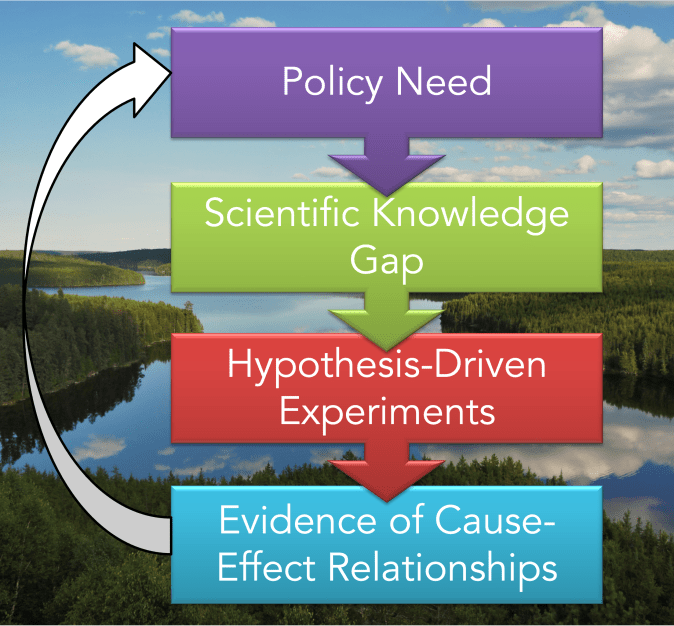
Our work is driven by today’s policy needs in chemical management. We begin by identifying the gaps that our team can help address. Then, we design experiments to understand cause-effect relationships between chemicals and their effects on the environment – generating scientific evidence that can inform policy decisions.
The QE3 Research Group tests hypotheses regarding the fate and effects of aquatic contaminants through experimental manipulation. Our experiments simulate pollution at various scales of complexity, from simple model systems to real whole lakes. We most often work in mesocosms or limnocorrals – “mini-lakes” that represent an aquatic habitat and natural food web.
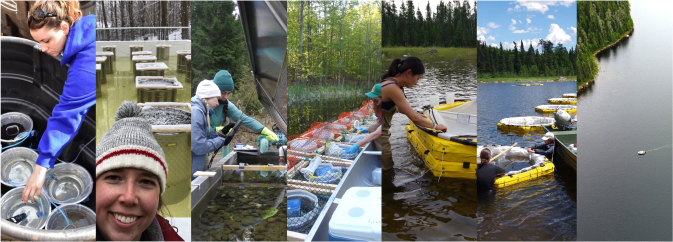
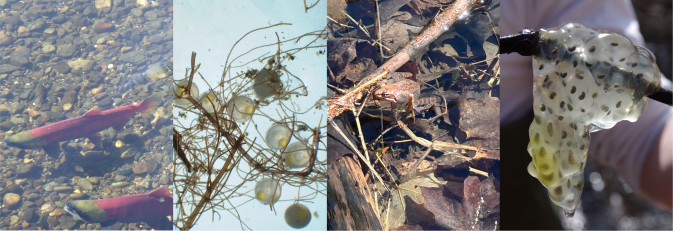
Our team works at multiple levels of the aquatic food web, from bacteria and phytoplankton through to fish and amphibians. We are interested in both the environmental fate of contaminants, as well as their effects at the individual, community, and ecosystem-levels.
Our research requires a high level of cooperation within our team and strong partnerships with other academics, government departments, non-profit organizations, and communities.
 Queen's Experimental Ecotoxicology for Environmental Policy